
What we
think.
Practical expertise. About the technology, projects, and challenges we deal with every day.
HIGHLIGHTED BLOG POST
Monitoring dark fibre before problems arise: active monitoring with the Adtran ALM
By definition, dark fibre is dark. No signal travels through it, there is no traffic to measure, and a traditional monitoring system detects nothing. Yet fibre-optic cables do degrade: connectors wear out, cables become damaged, and connections weaken due to temperature fluctuations or mechanical stress. If you don’t monitor this, you won’t notice it until the service goes down.
All articles
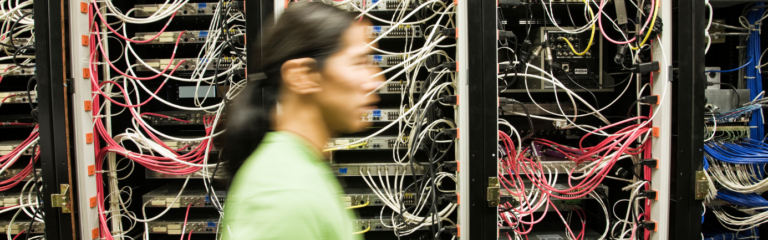
Monitoring dark fibre before problems arise: active monitoring with the Adtran ALM
- Tim Gruijters
By definition, dark fibre is dark. No signal travels through it, there is no traffic to measure, and a traditional monitoring system detects nothing. Yet fibre-optic cables do degrade: connectors wear out, cables become damaged, and connections weaken due to temperature fluctuations or mechanical stress. If you don’t monitor this, you won’t notice it until the service goes down.

Dark fibre runs through car parks: why Layer 1 encryption is not a luxury
- Tim Gruijters
Organisations that lease or own dark fibre often regard that
connection as private infrastructure. Their own fibre, their own data,
their own management. What is often underestimated, however, is that the physical cable runs
through infrastructure that you do not manage, beneath streets, through
building service rooms, via multi-storey car parks and
cable ducts in the public domain. And anyone with physical access to
the fibre has access to the data travelling over it.

After VMware: what alternatives are there for edge and remote site infrastructure?
- Tim Gruijters
Broadcom’s acquisition of VMware in 2023 was accompanied by significant changes to licensing. Perpetual licenses were discontinued, the product portfolio was reorganized into bundles, and for many organizations, costs rose significantly. This has accelerated the search for alternatives, particularly for environments where VMware has historically been widely used: edge locations and remote sites.

Open Wi-Fi: choosing access points without being tied to a single platform
- Tim Gruijters
Those rolling out Wi-Fi infrastructure traditionally purchase a complete package: access points and the management platform from the same vendor. That platform determines which APs you can use and how you manage them. Open Wi-Fi breaks that link in much the same way as open networking does for switches.

Open networking: why hardware and software are becoming separate in networks
- Tim Gruijters
In traditional network infrastructure, the hardware and software are from the same vendor. You buy a switch from manufacturer A, and the network operating system (NOS) running on it comes from that same manufacturer.
If you want different features or a different provider, you have to replace the entire stack. Open networking breaks that link.

Managing open-source DNS and DHCP at scale: what goes wrong without centralised control
- Tim Gruijters
BIND is the most widely used DNS server software in the world. ISC DHCP and its successor, Kea, are used in networks of all sizes. Both are open source, well documented and widely deployed. The problem lies not in the software itself, but in what happens when you manage ten, twenty or a hundred instances of it without centralised control.
© 2026 Distri X B.V.
act now.
Call, email, or send us your use case. We respond within an hour with substance, not marketing talk.